The Future of Business Operations: From Automation to Real-Time Intelligence
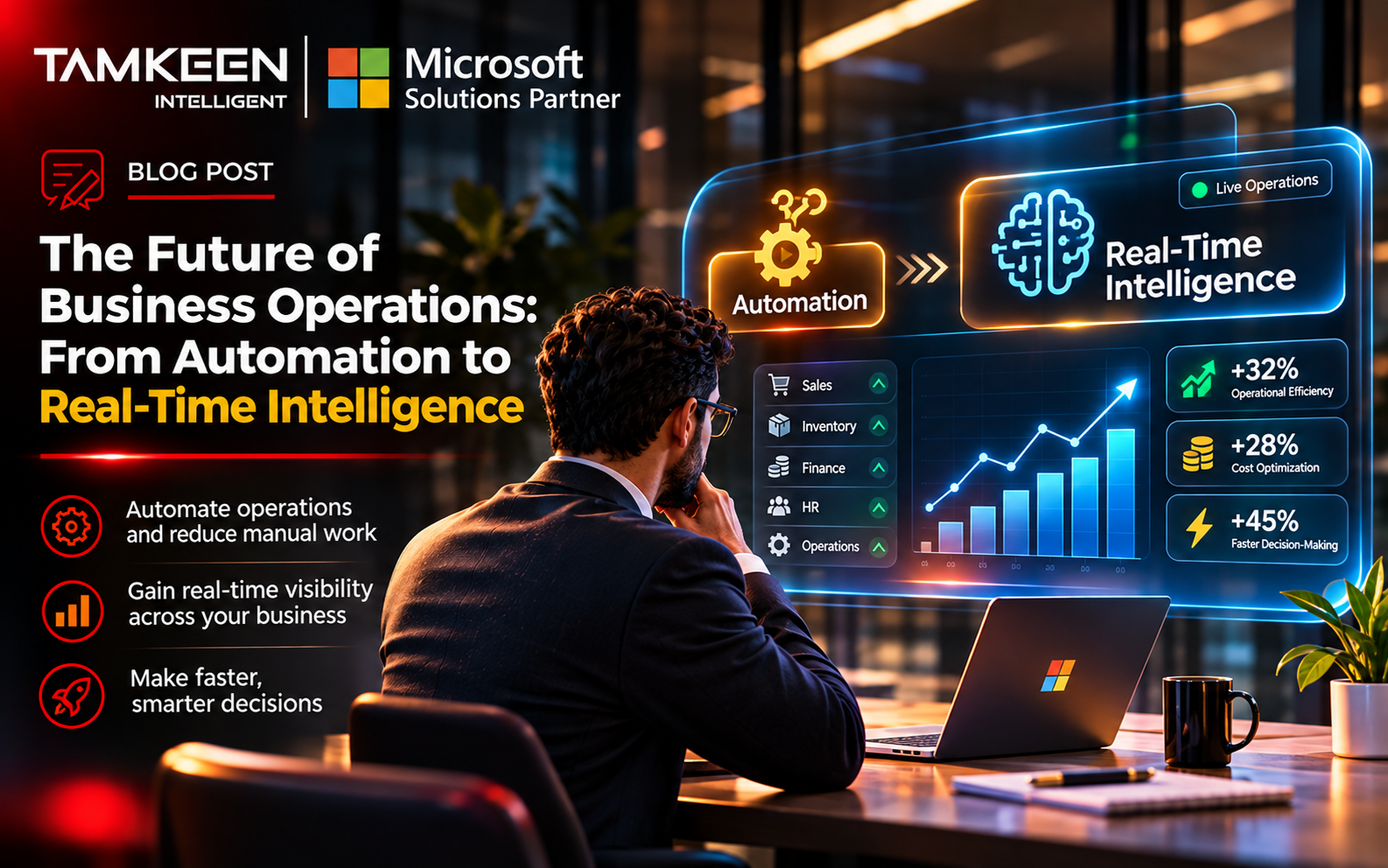
For years, digital transformation focused on automation: replacing paper, reducing manual data entry, digitizing approvals, and moving processes into enterprise systems.
That work remains important, but the next stage goes further. Businesses now want to understand what is happening as it happens, identify risks earlier, and give employees the information needed to act immediately.
The future of operations is therefore not simply automated. It is connected, real-time, and increasingly intelligent.
1. Automation Solves Tasks. Intelligence Improves Decisions.
Automation is valuable when a process is predictable: route an approval, generate a document, update a record, or trigger a notification.
Real-time intelligence adds another layer. It connects operational data, analytics, workflows, and AI so teams can understand changing conditions and respond faster.
2. Real-Time Visibility Changes Management
When information is delayed, management is forced to operate through historical reports. By the time a problem becomes visible, the opportunity to respond early may already be gone.
Connected enterprise systems can give decision-makers a clearer view across finance, procurement, sales, inventory, projects, supply chain, and other operational areas. Instead of asking only “What happened?”, leaders can focus on “What is happening now?” and increasingly “What should we do next?”
3. AI Is Becoming Part of the Operating Model
Microsoft is embedding Copilot experiences and AI agents across Dynamics 365, creating new ways to analyze data, automate work, surface exceptions, and support decisions.
This matters because operational intelligence is most useful when it is embedded directly into the workflows employees already use - not isolated in a separate AI experiment.
4. Operations Need to Move Beyond the Desk
Business happens everywhere. Sales teams meet customers. Project managers work on site. Executives travel. Logistics employees operate in the field. Managers need to approve requests wherever they are.
A modern operating model should therefore make key processes available closer to the people who need them.
5. Extending Dynamics 365 with Intelligent Operations
At Tamkeen Intelligent, this is the idea behind our Intelligent Ecosystem and IOM - Intelligent Operations Management.
IOM is designed to make essential enterprise processes more accessible while remaining connected to Microsoft Dynamics 365. It can bring together areas such as Projects, Purchasing, Finance, Sales, My Workflow, and Payment Requests so users can interact with important business processes without being tied to a traditional desktop ERP experience.
6. One Connected Operating Environment
The biggest opportunity comes when enterprise data, workflows, mobile access, analytics, and AI are not treated as separate initiatives.
Microsoft Dynamics 365 can provide the core business-process foundation, while integrated applications, automation, and AI extend that foundation closer to everyday work. The result is an operating environment that can be more responsive, visible, and scalable.
The Journey from Automation to Intelligence
- Digitize the process.
- Connect the data.
- Automate repetitive work.
- Make information available in real time.
- Use AI to surface insights and exceptions.
- Enable people to act faster with better context.
At Tamkeen Intelligent, we help organizations build toward this model by combining Microsoft Dynamics 365, intelligent business applications, automation, analytics, and AI. The objective is not simply to make existing work digital. It is to create a smarter way for the business to operate.